Description
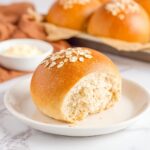
These Oatmeal Molasses Dinner Rolls are soft, slightly sweet, and perfect for any meal. Made with whole rolled oats and rich molasses, they offer a wholesome flavor and tender crumb. The combination of warm milk and water activates yeast for a perfect rise, while a golden egg wash finish adds a beautiful shine and oats topping. Ideal for family dinners or special occasions, these rolls stay fresh for days and are simple to prepare with a stand mixer or by hand.
Ingredients
Scale
Wet Ingredients
- 1 cup (240g/ml) water, warmed to about 110°F (43°C)
- 1/3 cup (80g/ml) whole milk, warmed to about 110°F (43°C)
- 4 tablespoons (56g) unsalted butter, softened to room temperature and cut into 4 pieces
- 3 tablespoons (64g) molasses (do not use blackstrap; preferred Grandma’s brand)
- 1 egg white beaten with 1 teaspoon of water (for egg wash)
Dry Ingredients
- 1 tablespoon (9g) Platinum Yeast from Red Star instant yeast
- 3 tablespoons light or dark brown sugar, divided
- 1 cup (85g) old-fashioned whole rolled oats, plus more for topping
- 3 and 1/2 cups (455g) bread flour (spooned & leveled), plus more as needed
- 1 teaspoon salt
Instructions
- Prepare the yeast mixture: Whisk the warm water, warm milk, yeast, and 1 tablespoon of brown sugar together in the bowl of your stand mixer. Cover and let sit for 5–10 minutes until foamy, indicating the yeast is active and ready. If you don’t have a stand mixer, mix in a large bowl using a wooden spoon or spatula.
- Combine initial ingredients: Add the remaining 2 tablespoons of brown sugar, molasses, softened butter, oats, salt, and 1 cup of the bread flour to the yeast mixture. Mix on low speed for 1 minute to integrate ingredients, then scrape down the sides of the bowl to ensure even mixing.
- Add remaining flour: Gradually add the remaining 2 and 1/2 cups of bread flour. Beat on medium speed until a dough forms that pulls away from the sides of the bowl, approximately 2 minutes. Add additional flour by tablespoon increments if the dough feels too wet or sticky.
- Knead the dough: Knead the dough using your stand mixer for 5 to 8 minutes with a dough hook attachment, or by hand on a lightly floured surface for the same time. The dough should be soft and slightly tacky but manageable. Poke the dough; it should slowly bounce back, indicating it is ready for rising.
- First rise: Lightly grease a large bowl with oil or non-stick spray. Place the dough inside, turning it to coat all sides with oil. Cover with plastic wrap or a clean towel and let rise in a warm place for 1.5 to 2 hours, or until doubled in size.
- Prepare baking pan: Grease a 9×13-inch baking pan or two 9-inch round pans, or line them with parchment paper. Alternatively, a cast-iron skillet or a baking sheet lined with parchment can be used for baking.
- Shape the rolls: Punch down the risen dough to remove air. Divide it into 15 equal portions of about 68–70 grams each. Shape each piece into a smooth ball by stretching the top and pinching the bottom closed. Arrange the rolls evenly in the prepared pan.
- Second rise: Cover the rolls with plastic wrap or a clean kitchen towel. Let them rise again until they are puffy and have visibly grown, about 30 to 60 minutes.
- Preheat oven: Position the oven rack lower than usual to prevent tops from burning. Preheat the oven to 350°F (177°C).
- Bake the rolls: Brush the rolls with the egg wash made from egg white and water. Lightly sprinkle extra oats on top for texture and appearance. Bake for 26 to 27 minutes until golden brown, turning the pan halfway through baking. If the rolls brown too quickly, loosely cover with foil. Check doneness by inserting an instant-read thermometer; the internal temperature should read 190°F (88°C).
- Cool and store: Let the rolls cool for a few minutes before serving. Store any leftovers tightly covered at room temperature for 2 to 3 days or refrigerate for up to one week to maintain freshness.
Notes
- Use warm liquids at about 110°F (43°C) to properly activate the yeast without killing it.
- Do not use blackstrap molasses as it has a stronger, more bitter flavor; opt for milder molasses brands like Grandma’s.
- Add flour gradually to avoid overly dense dough—dough should be slightly tacky but non-sticky.
- Check the internal temperature of rolls to ensure perfect baking and avoid undercooked interiors.
- For softer rolls, brush with melted butter immediately after baking if desired.
- Oats on top add a rustic look and texture but can be omitted if preferred.