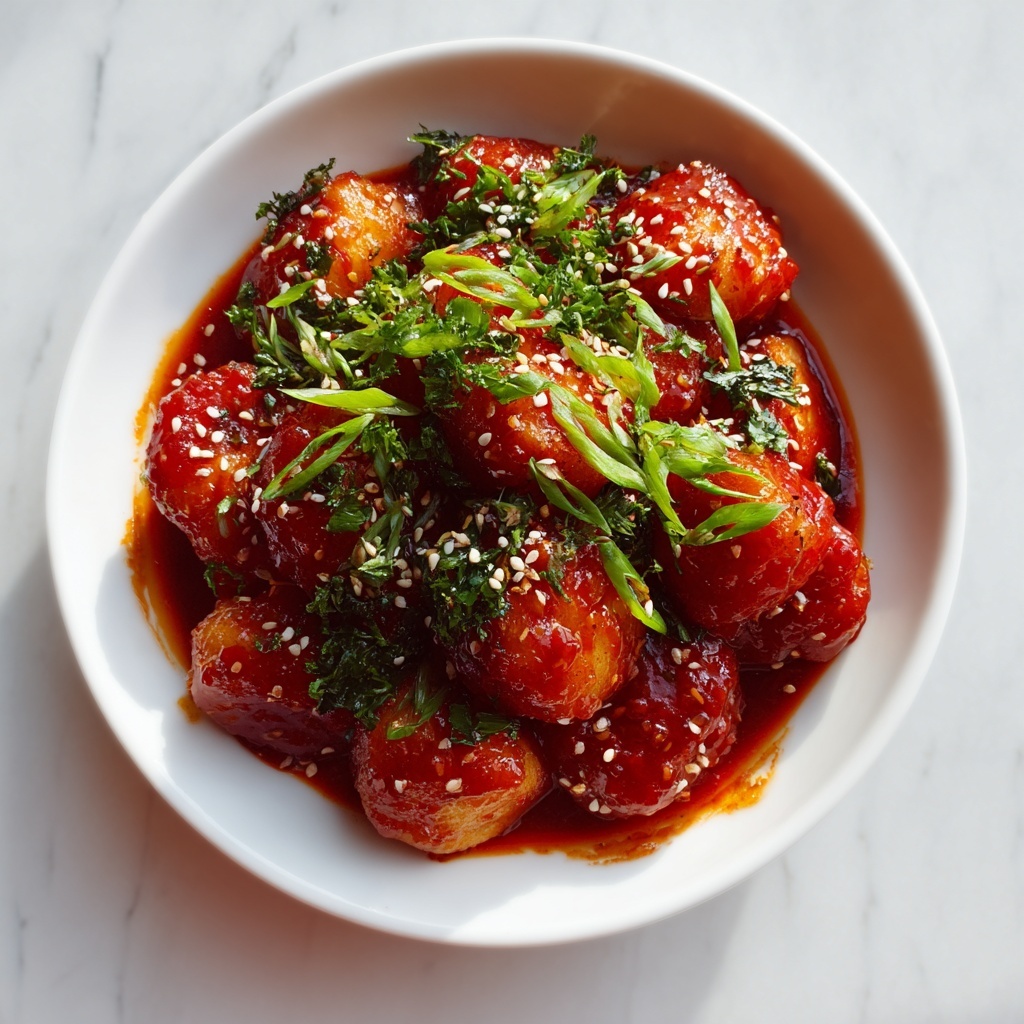
If you’re craving a dish that bursts with vibrant flavors and satisfying textures, the Korean Cylinder Rice Cakes in Spicy Gochujang Sauce Recipe has you covered. This beloved Korean comfort food features chewy, tender rice cakes swimming in a luscious, spicy, and slightly sweet gochujang sauce that clings perfectly with every bite. It’s an absolute crowd-pleaser that’s quick to whip up, making it a go-to meal when you want something both comforting and exciting. Sharing this recipe feels like inviting you into my kitchen to enjoy one of my all-time favorite Korean delights.
Ingredients You’ll Need
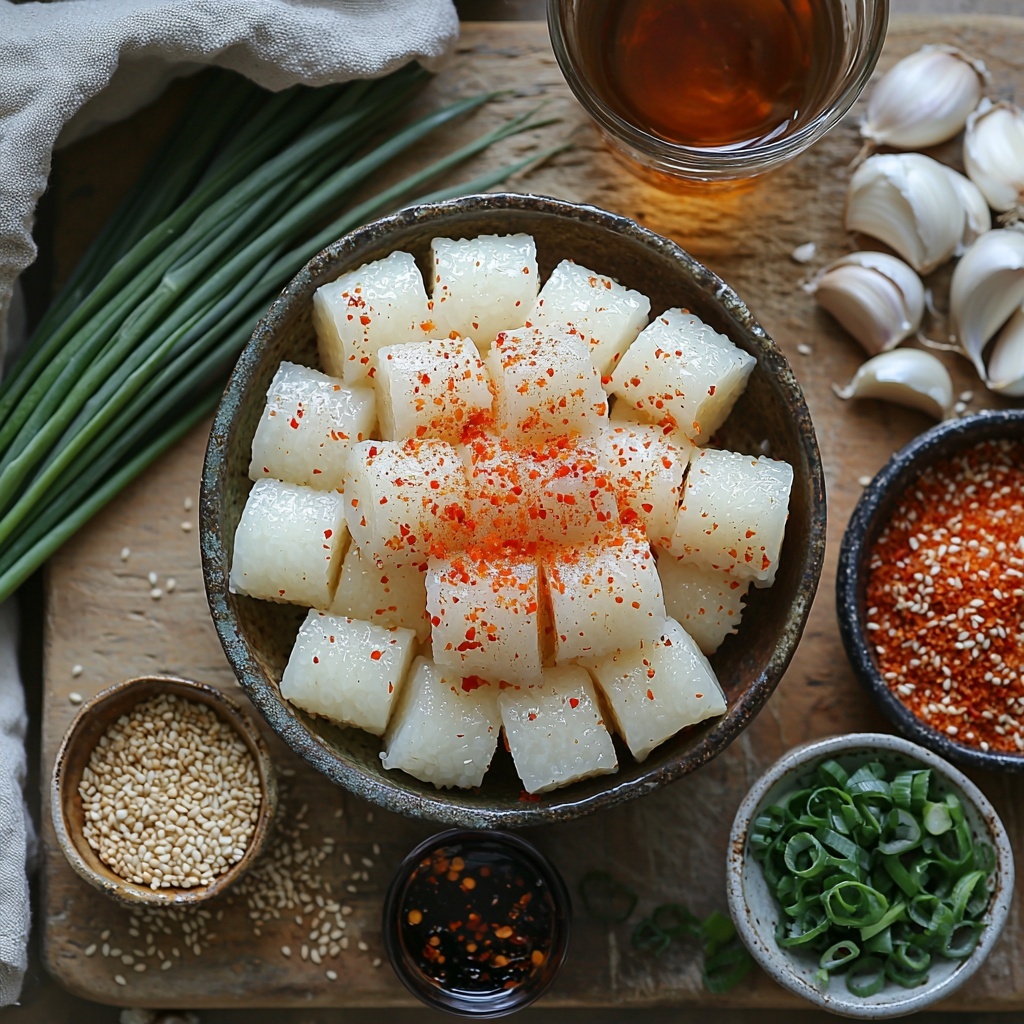
Simple ingredients are the magic behind this Korean Cylinder Rice Cakes in Spicy Gochujang Sauce Recipe. Each item plays a vital role, whether it’s adding depth, heat, or texture, and together they come alive as a harmonious dish that’s both comforting and exhilarating.
- Korean Cylinder Rice Cakes (Tteok): The star ingredient, these chewy rice cakes soak up the sauce beautifully, giving the dish its signature texture.
- Gochujang (Korean Chili Paste): A key flavor booster that provides spicy, sweet, and umami notes all at once.
- Gochugaru (Korean Chili Flakes): Adds extra heat and a delicate smoky depth to complement the gochujang.
- Soy Sauce: Balances the sweetness and spice with savory saltiness.
- Sugar: Smooths the sauce by softening the spice and bringing everything together.
- Garlic, minced: Infuses an aromatic punch that lifts the entire dish.
- Water or Anchovy Broth: Provides a flavorful cooking liquid that makes the sauce silky and rich.
- Green Onions, sliced: Adds fresh, mild onion flavor and a pop of color at the end.
- Toasted Sesame Seeds: Sprinkle at the finish for nutty crunch and visual appeal.
How to Make Korean Cylinder Rice Cakes in Spicy Gochujang Sauce Recipe
Step 1: Warm Your Pan
Start by warming a skillet or pan over medium heat so it’s ready for the sauce and rice cakes. This ensures even cooking and a smooth simmering process.
Step 2: Mix the Sauce
In a bowl, combine the gochujang, gochugaru, soy sauce, sugar, and minced garlic. Stir these together until smooth and well blended. This mix is the spicy, flavorful heart of the dish that makes the rice cakes so irresistible.
Step 3: Build the Sauce Base
Pour the water or anchovy broth into your warmed pan, then stir in the gochujang sauce mixture. Bring everything to a gentle boil. This bubbling base will help meld all the flavors and soften the rice cakes as they cook.
Step 4: Add the Rice Cakes
Add the Korean Cylinder Rice Cakes to the simmering sauce, making sure they are fully submerged. This allows the rice cakes to absorb the sauce evenly and become tender without sticking.
Step 5: Simmer Until Perfect
Let the rice cakes simmer for 10 to 12 minutes, stirring occasionally so the sauce thickens and coats each piece beautifully. You’ll notice the sauce transform into a glossy, richly flavored glaze that clings lovingly to every rice cake.
Step 6: Finish with Freshness and Crunch
Toss in the sliced green onions and sprinkle the toasted sesame seeds. Stir gently to distribute these last bursts of freshness and nuttiness—finishing touches that elevate the dish to the next level.
Step 7: Serve Hot and Enjoy
Serve the Korean Cylinder Rice Cakes in Spicy Gochujang Sauce Recipe hot, ideally in shallow bowls so the sauce shines. Dig in right away and enjoy the comforting chewiness of the rice cakes accompanied by the bold, spicy sauce that’s simply addictive.
How to Serve Korean Cylinder Rice Cakes in Spicy Gochujang Sauce Recipe
Garnishes
To make your dish pop visually and texturally, extra sliced green onions and a sprinkle of toasted sesame seeds go a long way. You might also add a few thin strips of toasted seaweed for extra depth and contrast.
Side Dishes
This spicy rice cake dish pairs wonderfully with simple steamed rice to balance the heat and richness. You can also serve kimchi or fresh cucumber salad on the side for a refreshing crunch and palate cleanser.
Creative Ways to Present
For a fun twist, serve the Korean Cylinder Rice Cakes on a sizzling hot plate to keep the sauce warm and slightly caramelized at the edges. Or arrange them as bite-sized skewers for parties, making a playful, finger-friendly presentation.
Make Ahead and Storage
Storing Leftovers
Store any leftover Korean Cylinder Rice Cakes in an airtight container in the refrigerator for up to 2 days. The rice cakes may firm up, so warming them gently before serving is key to regaining their perfect chewy texture.
Freezing
While it’s best enjoyed fresh, you can freeze leftovers in a sealed container for up to one month. When ready to eat, thaw overnight in the fridge and reheat carefully to avoid overcooking the rice cakes.
Reheating
To reheat, warm the rice cakes slowly in a pan with a splash of water or broth, stirring occasionally. This helps the sauce loosen up and the rice cakes regain their tender chewiness without drying out.
FAQs
Can I use a different type of rice cake?
While Korean cylinder rice cakes (tteok) work best because of their chewy texture, you can experiment with other rice cakes, but be mindful that smaller or thinner ones might overcook and become too soft.
What if I don’t have gochugaru?
If gochugaru isn’t available, you can substitute with a mild chili powder, but the flavor will be less authentic. The chili flakes add a subtle smoky heat that’s worth seeking out for this recipe.
Is this dish very spicy?
It can be! The gochujang and gochugaru bring a good level of heat, but you can adjust the spice by using less gochugaru or balancing with more sugar or broth to suit your taste preferences.
Can I make the sauce ahead of time?
Absolutely! Preparing the sauce mixture ahead can save time. Store it in the fridge and mix it with broth or water right before cooking the rice cakes for the freshest taste.
What’s anchovy broth and can I skip it?
Anchovy broth adds a savory umami depth traditional to Korean cooking, but if you prefer, water works well too. Just keep in mind the broth elevates the flavor nicely.
Final Thoughts
There’s something truly special about the Korean Cylinder Rice Cakes in Spicy Gochujang Sauce Recipe that keeps me coming back for more. From the chewy rice cakes to the addictive sauce, it’s a dish that’s both comforting and exciting. I hope you enjoy making and sharing it just as much as I do—spice up your meals with this unforgettable Korean classic!
Print
Korean Cylinder Rice Cakes in Spicy Gochujang Sauce Recipe
- Prep Time: 10 minutes
- Cook Time: 15 minutes
- Total Time: 25 minutes
- Yield: 4 servings
- Category: Main Dish
- Method: Stovetop
- Cuisine: Korean
Description
Korean Cylinder Rice Cakes, or Tteokbokki, is a spicy and savory Korean street food favorite featuring chewy rice cakes simmered in a vibrant gochujang-based sauce. This quick and easy recipe combines the heat of Korean chili paste and flakes with the umami of soy sauce and anchovy broth, delivering a flavorful dish perfect for a snack or light meal.
Ingredients
Rice Cakes and Broth
- 1 pound Korean Cylinder Rice Cakes (Tteok)
- 2 cups Water or Anchovy Broth
Sauce
- 2 tablespoons Gochujang (Korean Chili Paste)
- 1 tablespoon Gochugaru (Korean Chili Flakes)
- 2 tablespoons Soy Sauce
- 1 tablespoon Sugar
- 2 cloves Garlic, minced
Garnish
- 2 Green Onions, sliced
- 1 teaspoon Toasted Sesame Seeds
Instructions
- Preheat the Pan: Warm your skillet or pan over medium heat to get it ready for cooking the sauce and rice cakes.
- Prepare the Sauce: In a bowl, combine gochujang, gochugaru, soy sauce, sugar, and minced garlic. Mix thoroughly until smooth and well blended.
- Start the Simmer: Pour water or anchovy broth into the warm pan. Stir in the prepared sauce mixture, then bring the liquid to a gentle boil over medium heat.
- Add Rice Cakes: Place the Korean cylinder rice cakes into the simmering sauce. Ensure that the rice cakes are fully submerged in the liquid for even cooking.
- Simmer Until Tender: Continue to simmer the mixture for 10–12 minutes, stirring occasionally to prevent sticking. Cook until the sauce thickens and evenly coats the chewy rice cakes.
- Add Garnishes: Stir in sliced green onions and toasted sesame seeds to add freshness and a nutty crunch to the dish.
- Serve Hot: Transfer the cooked rice cakes and sauce to shallow bowls and enjoy immediately for the best flavor and texture.
Notes
- You can substitute anchovy broth with water for a milder taste or to keep it vegetarian.
- If rice cakes are frozen or hard, soak them in warm water for 10 minutes before cooking to soften.
- Adjust the amount of gochujang and gochugaru for your preferred spice level.
- For added protein, consider adding boiled eggs or fish cakes to the simmering sauce.
- Leftovers can be refrigerated and reheated in a pan with a splash of water to loosen the sauce.